


Discover Michelle Smallmon age full biography in 2026 — her height, ESPN Radio career, Unsportsmanlike co-host role, net worth, St. Louis roots, and latest updates. A complete, fact-checked profile of one of America’s top sports radio personalities.
Quick Facts About Michelle Smallmon
| Detail | Information |
|---|---|
| Full Name | Michelle Smallmon |
| Date of Birth | August 13, 1986 |
| Age (2026) | 39 Years Old |
| Birthplace | Belleville, Illinois, USA |
| Nationality | American |
| Height | 5 feet 7 inches (170 cm) |
| Weight | Approx. 143 lbs (65 kg) |
| Education | University of Illinois at Urbana-Champaign (Broadcast Journalism, 2008) |
| High School | Althoff High School, Belleville, IL |
| Parents | Tony Smallmon (Father), Robin Smallmon (Mother) |
| Marital Status | Not Married (Single as of 2026) |
| Profession | Sports Radio Host, Media Personality |
| Current Role | Co-Host, Unsportsmanlike – ESPN Radio (6–10 AM ET) |
| Co-Hosts | Evan Cohen, Chris Canty |
| Net Worth (2026) | $1.5 Million – $2 Million (Estimated) |
| Social Media (X/Twitter) | @msmallmon |
Michelle Smallmon Biography: From Belleville to the National Stage
Michelle Smallmon is one of the most trusted and recognizable voices in American sports radio today. Her path from a small town in Illinois to the flagship morning show on ESPN Radio is a story of patience, resilience, and a genuine love for sports. She did not take a shortcut — she grinded through local stations, production booths, and hustle jobs in New York before landing one of the most coveted seats in sports broadcasting.
Born and raised in Belleville, Illinois — a community just outside St. Louis, Missouri — Michelle grew up surrounded by sports. Her family made regular trips to Busch Stadium to watch the Cardinals, attended high school football games, and embraced the passionate sports culture of the greater St. Louis region. That Midwestern upbringing gave her something many broadcasters lack: authentic relatability. She speaks to fans the way a knowledgeable friend would, not like someone reading off a teleprompter.
Her broadcasting instincts showed early. At Althoff High School, she played varsity volleyball as a freshman and served as team co-captain during her senior year in 2004. That competitive mindset carried into her academic career at the University of Illinois at Urbana-Champaign, where she was part of the women’s volleyball team and earned a degree in broadcast journalism in 2008.
Michelle Smallmon Age: Born in 1986, Thriving at 39 in 2026
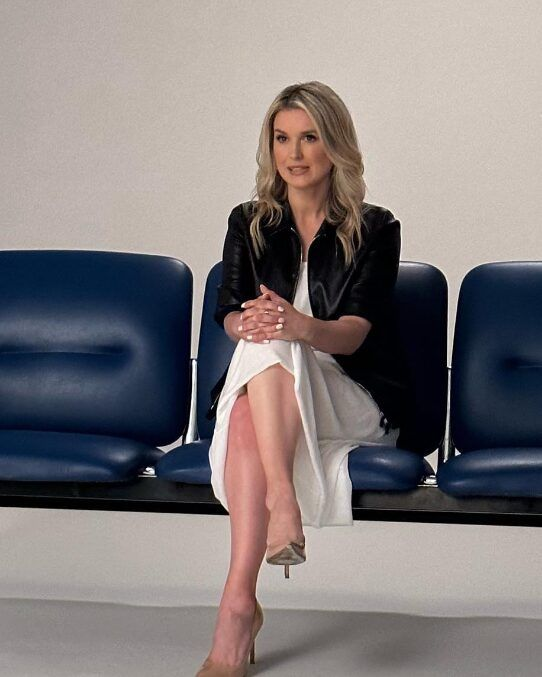
Michelle Smallmon was born on August 13, 1986, making her 39 years old in 2026. She spent her formative years in Belleville, Illinois, where her parents — Tony Smallmon, who works in real estate, and Robin Smallmon — encouraged her love of sports and communication from a young age. At 39, she is at the peak of her broadcasting career, leading one of ESPN Radio’s most-listened-to morning programs with the kind of confidence that only comes from over a decade of on-air experience.
Michelle Smallmon Height: Physical Presence That Commands the Room
Michelle Smallmon stands at 5 feet 7 inches tall (170 cm) and weighs approximately 143 pounds (65 kg). Her height gives her a composed and professional presence — both on radio and during the live events and television appearances that have become a growing part of her career. In a field where on-camera credibility matters, Michelle strikes a natural balance between authority and approachability. Her look has evolved over the years from local radio personality to polished national broadcaster, though her personality has always stayed the same: real, sharp, and sports-obsessed.
Michelle Smallmon Biography: Early Career and the Road to ESPN
Michelle’s professional journey began in 2008 when she started as a news production assistant at KSDK, the NBC affiliate in St. Louis. That entry-level role taught her the fundamentals of live media production and gave her a window into the demands of daily broadcasting. In 2009, she made her move into sports radio, joining 101 ESPN in St. Louis as a production assistant.
Over the next several years, she worked her way up through the ranks at 101 ESPN, producing and contributing on-air to multiple signature programs including The Fast Lane and The Bernie Miklasz Show. These years between 2009 and 2015 were formative — she developed her voice, built relationships in the sports media world, and became a fixture in the St. Louis sports community.
In 2015, she made the leap to ESPN’s national network, taking on a producer role in New York and working alongside talent such as Jorge Sedano and Jen Lada. She spent years in that behind-the-scenes capacity before eventually returning to St. Louis in a bigger role.
Michelle Smallmon St. Louis: A City That Shaped Her Career
St. Louis is woven deeply into Michelle Smallmon’s professional identity. After her time with ESPN’s national network, she returned to 101 ESPN in St. Louis and, in May 2020, made history by becoming the first woman to have her name on a show at the station. Her program, Karraker & Smallmon, ran through September 2022 and became one of the station’s most popular morning offerings.
Beyond radio, Michelle embedded herself in St. Louis’s broader sports scene. She served as the in-game host for the St. Louis Battlehawks of the XFL and contributed video content for St. Louis City SC, the city’s MLS team. She hosted major live events including St. Louis’s signature New Year’s Eve celebration at Ballpark Village and the prestigious USBWA dinner at the Missouri Athletic Club, where she interviewed top names in college basketball. St. Louis didn’t just launch her career — it gave her the stage to become a trailblazer.
Michelle Smallmon ESPN Radio: Betting on Herself in New York
In September 2022, Michelle made one of the boldest moves of her career. She left her position at 101 ESPN in St. Louis and relocated to New York City — without a job lined up, without a place to live, and with only a one-year plan to make something work. She signed a 30-show “usage deal” with ESPN Radio, filling in on various programs. To make ends meet, she worked at a jewelry store, packed meals on the side, and took whatever freelance media work came her way.
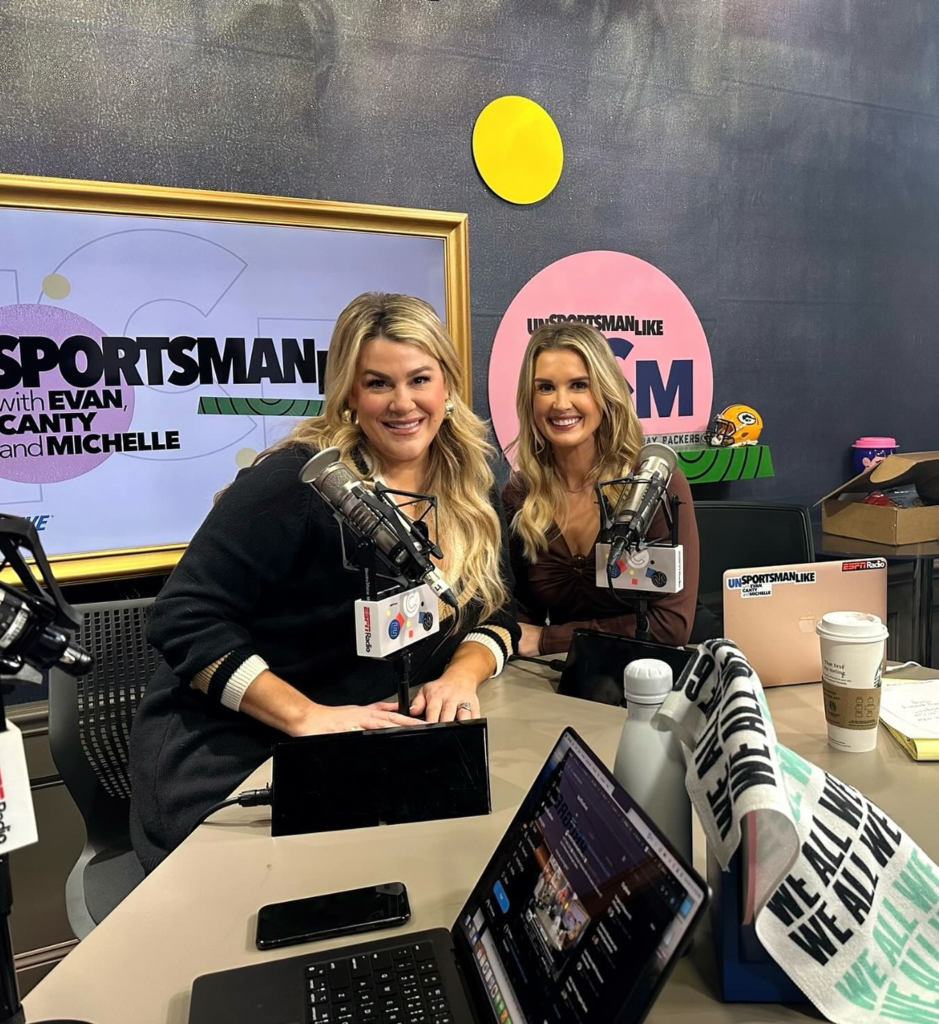
That gamble paid off. Just as her usage deal was set to expire, ESPN Radio boss Justin Craig offered her a co-hosting role on the network’s flagship morning show. When Craig first mentioned “morning drive,” Michelle thought he was offering her the overnight SportsCenter lead-in. She had no idea he meant the main event.
“It was something that, in my wildest dreams, I would have never even fathomed,” she later told Front Office Sports.
The offer was real — and she took it.
Michelle Smallmon Unsportsmanlike: The Show That Changed Everything
Unsportsmanlike airs Monday through Friday from 6–10 AM ET on ESPN Radio and SiriusXM Channel 80. Michelle co-hosts alongside Evan Cohen and Chris Canty, and the trio has built a reputation for fast-moving, opinionated, and genuinely entertaining sports conversation that covers the NFL, NBA, MLB, and every major trending topic in sports culture.
The show is the cornerstone of ESPN Radio’s daily programming, occupying the most competitive time slot in sports talk. Morning drive has historically been the network’s most important block — the same slot that once belonged to the legendary Mike & Mike program. Michelle holding that seat is a reflection of both her broadcasting talent and the trust ESPN has placed in her.
The chemistry between Michelle, Evan, and Chris has been one of the show’s biggest draws. A three-person radio show is notoriously difficult to balance, but the Unsportsmanlike trio has managed to carve out distinct roles while keeping the conversation fluid and engaging.
Michelle Smallmon Career Highlights: A Decade of Milestones
Michelle’s career is filled with moments that reflect steady upward movement, even when the path was not always straight.
She became the first woman to have her name on a show at 101 ESPN in St. Louis when Karraker & Smallmon launched in 2020. She has sat across from some of the biggest names in professional sports, including Tom Brady, LeBron James, Patrick Mahomes, and Mike Trout. She hosted major civic events in St. Louis and served as the game-day voice of the Battlehawks XFL franchise. She also participated in the New York City Marathon on behalf of the V Foundation, a leading cancer research organization.
Each of these milestones reflects not just professional achievement but a personality that extends beyond the microphone — someone who takes her platform seriously and uses it to do more than just talk sports.
Michelle Smallmon Podcast: Digital Reach and On-Demand Content
In addition to her daily ESPN Radio broadcast, Unsportsmanlike is available as a podcast through ESPN’s digital platforms, reaching fans who prefer on-demand content. The show’s podcast version has attracted a growing audience, allowing Michelle’s commentary to reach listeners well beyond traditional radio markets. Her presence on X (formerly Twitter) at @msmallmon with over 44,000 followers further amplifies her voice in the digital sports conversation. As ESPN continues to invest in audio and digital expansion, Michelle’s role is expected to grow in the podcast space as well.
Michelle Smallmon Net Worth: What She’s Built Over 15+ Years
As of 2026, Michelle Smallmon’s estimated net worth is between $1.5 million and $2 million. The bulk of her income comes from her ESPN Radio salary, with industry estimates suggesting that experienced national hosts at the network earn between $100,000 and $200,000 annually, depending on show ratings and seniority.
Beyond her base salary, Michelle earns through media appearances, speaking engagements, brand collaborations, and digital content tied to the Unsportsmanlike podcast and ESPN’s broader content ecosystem. Her net worth reflects more than 15 years of sustained work in a competitive industry — from production assistant to national morning host — and the financial growth that comes with it.
Michelle Smallmon 2026 Updates: Where She Stands Today
In 2026, Michelle Smallmon is firmly established as one of ESPN Radio’s anchor personalities. She continues to co-host Unsportsmanlike weekday mornings, bringing her signature combination of Midwestern authenticity and sharp sports analysis to millions of listeners. Her profile at ESPN has grown to include television contributions, with appearances on SportsCenter and various ESPN special events.
On a personal level, Michelle remains unmarried and private about her romantic life as of 2026. She has consistently kept personal relationship details out of the public eye, and no verified reports have confirmed a spouse or long-term partner. Her focus, by all accounts, remains on her career, her charity work, and the city of New York she has come to call home.
She continues to be actively involved in philanthropic work, having previously served on the board of The Young Professionals for the St. Louis Zoo and The Little Bit Foundation, which works to reduce barriers to learning for underserved students.
Final Thoughts: Why Michelle Smallmon Matters in 2026
Michelle Smallmon’s story resonates because it is not a story of overnight success. It is a story of someone who earned every step — from packing meals in New York to sitting in the flagship morning chair at ESPN Radio. She is one of the few women to hold a top-billing co-host position on a national sports radio network, and she got there by outworking the competition, staying authentic, and never losing sight of why she got into sports media in the first place.
At 39, with her career still very much in full stride, Michelle Smallmon is one of the most compelling figures in American sports broadcasting — and her best years may still be ahead.





One Comment