
Jasper Breckenridge Johnson Biography – Don Johnson’s Son, Age, Basketball Passion


Discover Jasper Breckenridge Johnson’s full biography — Don Johnson’s son, born June 6, 2002. Learn about his age, parents, siblings, basketball career, education, net worth, and private lifestyle in this complete 2026 profile.
Quick Facts Table
| Detail | Information |
|---|---|
| Full Name | Jasper Breckenridge Johnson |
| Date of Birth | June 6, 2002 |
| Age (2026) | 23 Years Old |
| Birthplace | Los Angeles, California, USA |
| Raised In | Santa Barbara, California |
| Nationality | American |
| Father | Don Johnson (Actor) |
| Mother | Kelley Phleger (Former Teacher & Socialite) |
| Full Siblings | Atherton Grace Johnson, Deacon James Johnson |
| Half-Siblings | Dakota Johnson, Jesse Johnson |
| Education | Santa Barbara High School; Business Studies (College) |
| Profession | Student, Basketball Player |
| Height | Approx. 6 ft 2 in |
| Net Worth | Not publicly disclosed |
| Father’s Net Worth | Estimated $50 million |
| Social Media | None (Deliberately private) |
Not every child born into Hollywood chooses to live under its spotlight. Jasper Breckenridge Johnson is proof of that. The son of legendary actor Don Johnson and former schoolteacher Kelley Phleger, Jasper has grown up away from red carpets and paparazzi lenses, crafting a life defined by discipline, sports, and academic ambition. While his family name carries enormous weight in the entertainment world, Jasper has quietly been building his own identity — one basketball game and business class at a time.
Jasper Breckenridge Johnson Age and Early Life
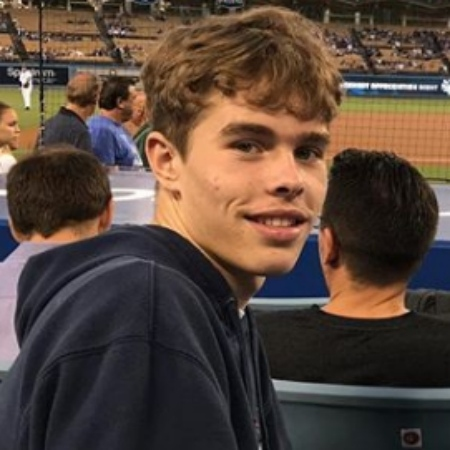
Jasper Breckenridge Johnson was born on June 6, 2002, in Los Angeles, California, making him 23 years old as of 2026. Although he entered the world in one of the most celebrity-saturated cities on the planet, his upbringing took a deliberately different direction. The family relocated to Santa Barbara, California, where Jasper spent most of his formative years in a calm, structured environment that prioritized education and personal values over fame and public attention.
Growing up in Santa Barbara gave Jasper something rare for a child of Hollywood stars — a sense of normalcy. He attended local schools, made friends outside the entertainment bubble, and developed a passion for basketball that would go on to define much of his teenage years. Unlike many celebrity children who find their way onto Instagram or into gossip columns before they turn eighteen, Jasper kept an impressively low profile, a choice that reflects both his own temperament and the parenting style of his mother and father.
Jasper Breckenridge Johnson Parents
Understanding Jasper’s character requires knowing the two people who raised him. His father, Don Johnson, is a Golden Globe-winning American actor and musician who rose to international fame in the 1980s through his iconic role as Sonny Crockett in the NBC crime drama Miami Vice. Born on December 15, 1949, Don Johnson built one of Hollywood’s most enduring careers, later starring in Nash Bridges and appearing in major films including Knives Out and Book Club. His charisma, talent, and decades-long career cemented his place as a true Hollywood legend.
Jasper’s mother, Kelley Phleger, brings an entirely different energy to the family. A former Montessori kindergarten teacher from a well-respected San Francisco family, Kelley is known for her grounded, private personality. She and Don Johnson first met at a birthday party in 1996. At the time, Kelley was working as a teacher and was previously linked to California Governor Gavin Newsom. Don and Kelley began dating in 1997, became engaged in 1998, and married on April 29, 1999, in a civil ceremony presided over by San Francisco’s mayor.
Their relationship has remained one of the most stable in Hollywood, and Kelley’s steady, values-driven presence has been widely credited with providing Jasper and his siblings with a grounded upbringing away from excessive media exposure.
Jasper Breckenridge Johnson Siblings
Jasper is not an only child — far from it. He comes from a large, blended family that reflects his father’s colourful personal history. Through his parents Don Johnson and Kelley Phleger, Jasper has two full biological siblings: an older sister, Atherton Grace Johnson, born in 1999, and a younger brother, Deacon James Johnson, born in 2006.
On his father’s side from previous relationships, Jasper also has two well-known half-siblings. The most prominent is Dakota Johnson, born on October 4, 1989, to Don Johnson and actress Melanie Griffith. Dakota is widely recognized for her role as Anastasia Steele in the Fifty Shades film series and for her acclaimed performance in other Hollywood productions. Jesse Johnson, born in 1982 from Don Johnson’s relationship with Patti D’Arbanville, is also an actor and musician who has maintained a presence in the entertainment industry.
Despite the differences in age and parentage, the Johnson family is said to share a close bond. Don Johnson’s 75th birthday in December 2024 was reportedly celebrated with all his children present, including Jasper — a testament to the family’s unity across its various branches.
Jasper Breckenridge Johnson Basketball
Of all the things that define Jasper Breckenridge Johnson, basketball stands at the top. His love for the sport began in his early teens and quickly evolved from a casual hobby into a serious competitive pursuit. Standing approximately 6 feet 2 inches tall, Jasper naturally found a home on the court, and his physical attributes — combined with sharp decision-making and composure — made him a standout player at Santa Barbara High School.
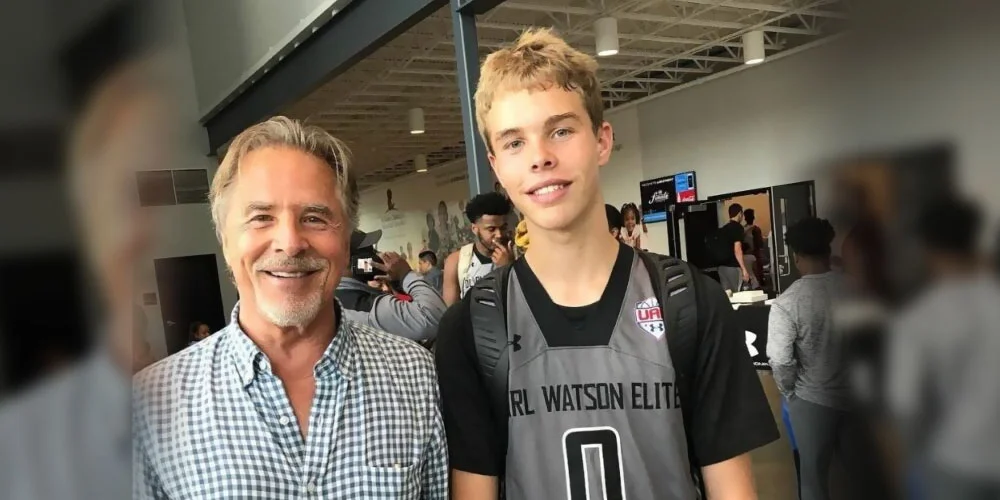
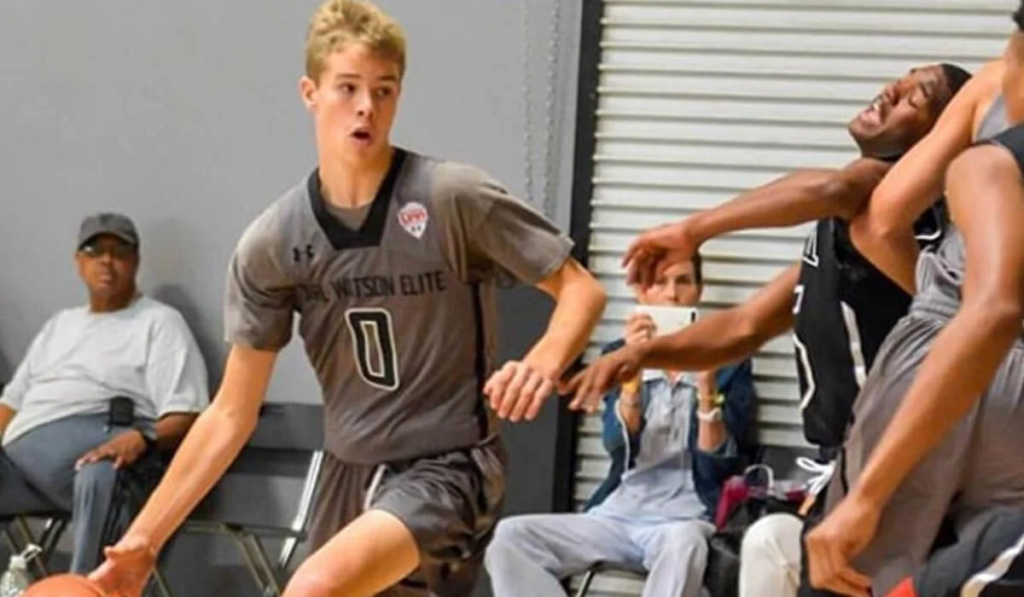
Jasper played as a point guard on the Santa Barbara High School varsity basketball team, earning a reputation not just for his athleticism but for his leadership and calm under pressure. A memorable moment came in 2020 when he scored a game-winning shot during a tightly contested match, drawing wide praise from coaches and teammates alike. That shot did more than win a game; it put Jasper on the radar of scouts and recruiting networks across California.
Beyond high school, Jasper took his game to the next level by joining the West Coast Elite Under Armour team, an elite-level AAU (Amateur Athletic Union) program where college scouts regularly observe talent. He competed in this program for five years, going up against some of California’s best young players and consistently holding his own at that demanding level. His participation in such a prestigious program underscores just how seriously he took the sport.
His commitment was further evidenced through a personal statement he submitted to NCSA (Next College Student Athlete), the well-known college sports recruiting organization. In it, he wrote with clarity and intentionality about his dual ambitions: “Outside of being a collegiate basketball player, I intend to major in business and graduate with a 4-year degree and pursue a career in that field.” That statement speaks volumes — Jasper was not treating basketball as a fallback, nor was he neglecting his academic future. He was planning both, simultaneously and seriously.
His coaches consistently praised not only his physical gifts but his composure, coachability, and ability to perform when it mattered most. Those qualities, combined with five years of elite AAU experience, positioned Jasper as a legitimate collegiate basketball prospect.
Jasper Breckenridge Johnson Career and Education
Jasper graduated from Santa Barbara High School in 2021 and moved into higher education with a clear sense of direction. He has been pursuing a degree in business, with some sources suggesting he may be attending Pitzer College in Claremont, California, though he has kept the specific institution private in keeping with his broader preference for discretion. His academic focus on business reflects a deliberate plan to build a professional future rooted in knowledge and strategy rather than inherited fame.
His career trajectory at this stage blends athletic ambition with academic discipline. The goal, as he himself articulated in his recruiting profile, is to graduate with a four-year business degree and pursue a career in that field — potentially one that intersects with the world of sports. Interests in sports management and entrepreneurship have been noted by those close to him, suggesting a future where his love of basketball and his business education may converge professionally.
What makes Jasper’s story notable is the intention behind his choices. Many young people from wealthy, famous families coast on their last name. Jasper has consistently done the opposite — avoiding social media entirely, maintaining no public profiles, and seeking recognition through effort on the court and in the classroom rather than through proximity to celebrity.
Jasper Breckenridge Johnson Net Worth and Family Wealth
Jasper Breckenridge Johnson does not have a publicly disclosed personal net worth. As a young adult still in the education and early career phase of his life, he has not yet accumulated independent wealth from professional ventures. However, the financial context of his upbringing is significant. His father, Don Johnson, has an estimated net worth of over $50 million, built across decades of work in television, film, music, and production. Projects like Miami Vice, Nash Bridges, Knives Out, and various production ventures have contributed to that substantial figure.
Growing up in such an environment means Jasper has had access to excellent education, elite sports programs, and opportunities that most young people cannot take for granted. That said, his personal choices — studying business, pursuing basketball on merit, avoiding the influencer economy — suggest someone who is not content to simply live off family wealth but is instead actively working to build something of his own.
Jasper Breckenridge Johnson Family and Personal Life
Jasper’s personal life remains largely private by his own design. He has no verified social media accounts on Instagram, Twitter, or any major platform, which is genuinely unusual in an era where celebrity-adjacent individuals almost always cultivate an online presence. This absence is not an oversight — it is a deliberate choice that speaks to his values and his desire to live on his own terms.
He has been spotted occasionally at family events and private gatherings, and his bond with his father Don Johnson appears warm and genuine. The two have been photographed together at basketball events in Santa Barbara, highlighting a shared passion for the sport. Within his broader family unit, Jasper maintains relationships with all his siblings — full and half — and the Johnson family has demonstrated a consistent ability to maintain closeness despite its blended structure and the complexities of Hollywood life.
Beyond basketball and academics, Jasper is said to enjoy outdoor activities and takes an active interest in cultural awareness and environmental causes, reflecting a sense of civic responsibility that rounds out his character beyond sport and study.
A Legacy Built on His Own Terms
Jasper Breckenridge Johnson’s story is a quiet but compelling one. Born into one of Hollywood’s most recognizable families, he has navigated the privileges and pressures of that world with a maturity and groundedness that is genuinely admirable. He chose Santa Barbara over Sunset Boulevard, a basketball court over a film set, and a business degree over a social media following.
At 23, he is still in the early chapters of his adult life, and the full arc of what he will build remains unwritten. But the foundation — strong family values instilled by both parents, an elite athletic career, a focused academic path, and a clear sense of personal identity — suggests that whatever comes next for Jasper Breckenridge Johnson, it will be built with intention, discipline, and quiet confidence.
In a world that often rewards noise, Jasper is choosing substance. And that, perhaps, is the most interesting thing about him.